What to Check Before Buying a Renovation Property
A property in need of major renovation can be an exciting prospect for the right buyer. Perhaps it has a low guide price, plenty of space, attractive period features or the potential to create something completely different from the property that currently stands there.
For experienced renovators, developers and buyers who are prepared to take on a project, these properties can offer plenty of potential.
But there is a big difference between a house that needs decorating and one that needs a complete renovation.
If you are considering buying a property that requires substantial work, particularly at auction, it is important to understand exactly what you are taking on before you bid.
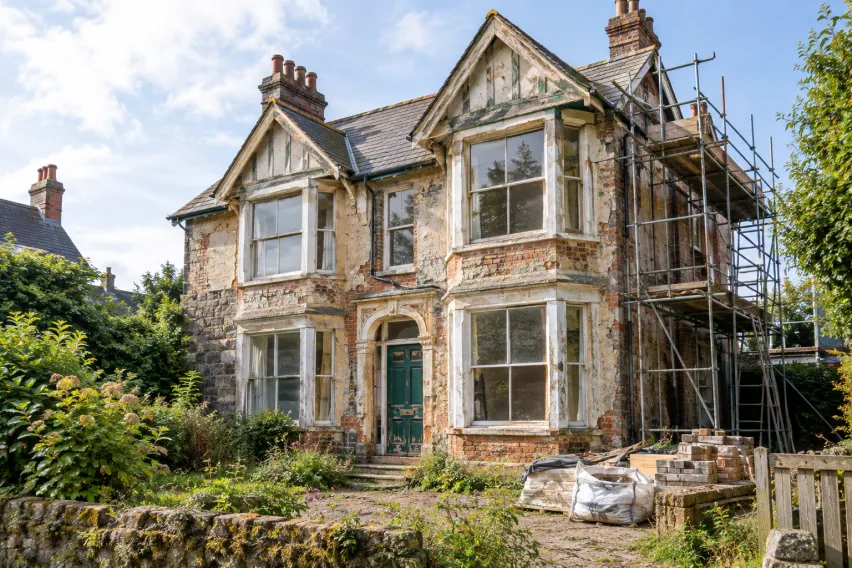
What Does "Major Renovation" Actually Mean?
There is no single definition of a major renovation.
For one property, it might mean replacing the kitchen and bathroom, updating the heating and redecorating throughout.
For another, it could involve a new roof, rewiring, replumbing, structural repairs, replacement windows, damp treatment and significant alterations to the layout.
Some properties may even require extensive work before they are suitable for occupation.
When viewing a potential renovation project, try to look beyond what the property looks like today and think about what needs to happen to make it safe, habitable and suitable for your intended use.
A house covered in peeling wallpaper may simply need some cosmetic work. A property with serious roof damage, structural movement and outdated services is a very different proposition.
Start With the Structure
Before thinking about paint colours, kitchens or flooring, establish whether the building itself is fundamentally sound.
Look carefully at:
- Roofs and chimneys
- External walls
- Cracks and signs of movement
- Floors and ceilings
- Timber
- Foundations where accessible
- Windows and external doors
- Extensions and alterations
- Signs of damp or water ingress
Some problems will be obvious during a viewing, while others may require professional investigation.
If you are seriously considering the property, it may be worth arranging a survey or obtaining advice from a suitably qualified professional before bidding.
This can be particularly important where there are signs of structural movement, significant damp or other defects that could have a major impact on the renovation budget.
Get a Clear Idea of What Needs Doing
It is very easy to look at a property requiring renovation and think:
"We can sort that out."
And perhaps you can.
But before deciding how much you are prepared to pay, make a detailed list of the work required.
Start with the essential work needed to make the property safe, secure and watertight. Then consider the work required to make it comfortable and habitable, followed by any improvements or cosmetic changes you would like to make.
For example, your list might include:
- Roof repairs or replacement
- Structural repairs
- Damp treatment
- Repointing or external repairs
- New windows and doors
- Rewiring
- New plumbing
- Heating system replacement
- Insulation
- Kitchen and bathroom installation
- Plastering
- Flooring
- Internal doors
- Decorating
- Garden clearance
- Drainage
- External works
Breaking the project down in this way can make it much easier to understand the scale of the renovation.
Get Professional Advice Where You Need It
You do not necessarily need a specialist for every aspect of a renovation, but there are times when professional advice can save you from making an expensive mistake.
A surveyor may be able to identify structural or building defects. An architect or other suitably qualified professional may be able to advise on proposed alterations. Specialist contractors can provide estimates for roofing, electrical, plumbing or other significant work.
If a problem is beyond your experience, it is usually better to investigate it before buying rather than discovering the answer after completion.
A professional opinion may cost money, but so can getting something wrong.
Work Out the True Renovation Cost
The purchase price is only the beginning when buying a major renovation project.
Try to obtain realistic estimates for the work wherever possible and remember that the cheapest estimate is not necessarily the most appropriate one.
Your overall budget may need to include:
- Purchase price
- Stamp Duty Land Tax where applicable
- Legal and professional fees
- Survey costs
- Building work
- Materials
- Skip hire and waste removal
- Planning or building control costs where applicable
- Architect or structural engineer fees
- Temporary accommodation if you cannot live in the property
- Insurance
- Council Tax and other ongoing costs
- Finance costs
- Contingency for unexpected problems
And that last point is particularly important.
Renovation projects have a habit of revealing surprises once walls, floors and ceilings start being opened up.
A sensible contingency can provide some breathing room if the work turns out to be more extensive than originally expected.
Don't Forget the Hidden Costs
Some of the biggest expenses are not necessarily the things you notice when you walk through the front door.
For example, replacing a kitchen may seem like the obvious priority, but the property might first require new electrical wiring, plumbing, plastering, flooring or structural work.
Similarly, replacing windows may reveal problems around the openings, while repairing a roof could uncover damaged timbers or water damage inside the property.
Try to think about the renovation as a series of connected jobs rather than a collection of individual improvements.
It is often worth tackling essential structural and services work before spending money on cosmetic improvements.
Check the Electrics, Plumbing and Heating
A renovation property may have services that are old, damaged or no longer suitable for modern use.
Look at the condition of the electrical installation, plumbing, heating system, boiler, radiators and visible pipework.
If the property has been empty for a long time, ask when these systems were last used and whether they have been maintained.
Do not assume that an existing boiler or electrical installation is serviceable simply because it is still there.
If the property is going to become a rental, additional legal and safety requirements will apply. For example, landlords in England have specific responsibilities concerning gas and electrical safety.
Check for Asbestos Before Major Refurbishment
If you are buying an older property, asbestos is another issue worth being aware of.
Asbestos can be present in a variety of building materials, particularly in properties built or refurbished during periods when asbestos-containing materials were commonly used.
If planned refurbishment work is likely to disturb the fabric of the building, appropriate asbestos advice and surveying may be required before work begins. The Health and Safety Executive advises that a refurbishment/demolition survey is needed where work is likely to disturb the fabric of a building.
This is not something to guess about. If you have concerns, seek advice from a suitably qualified professional.
Will You Need Planning Permission?
Renovating a property does not automatically mean you need planning permission.
Some repairs, improvements and alterations may not require a planning application, while other work will.
For example, an extension, significant alteration, change of use or certain external changes may require planning permission.
There are also permitted development rights that allow some householders in England to carry out certain improvements and extensions without a planning application, subject to specific limits and conditions. These rights do not remove other requirements such as building regulations.
If the property is listed, in a conservation area or subject to other restrictions, additional considerations may apply.
Always check with the relevant local planning authority before assuming that your plans will be permitted.
Planning Permission and Building Regulations Are Not the Same
This is an easy distinction to overlook.
Planning permission and building regulations approval are separate matters, and you may need both depending on the work you are proposing.
Building regulations cover the construction and alteration of buildings and can apply to a range of renovation work, including certain electrical, plumbing, roofing, window and structural projects.
The Government also provides for retrospective regularisation in certain circumstances where work has already been carried out without the necessary building regulations approval, although this can involve additional work and expense.
If you are buying a property where previous alterations have been made, check whether the appropriate permissions and certificates are available.
Look at Previous Alterations
A property that has been extended or converted over the years can be particularly interesting — but investigate what has been done.
Was an extension added? Has the loft been converted? Was a garage turned into living accommodation? Has the property been divided into flats?
Find out whether the relevant planning permissions, building regulations approvals and completion certificates are available where required.
This is particularly important if you intend to buy the property, carry out further work and eventually sell it.
Don't Assume the Finished Property Will Be Worth What You Think
It is easy to fall in love with the potential of a renovation project.
You can picture the beautiful kitchen, the new bathroom and the finished garden. You may even have mentally moved the furniture in before you've made your first bid!
But before you get carried away, research what similar completed properties are actually selling for.
Consider the location, size, condition, layout and finished specification of comparable properties.
Then work backwards.
If the finished property could potentially be worth £300,000, for example, that does not mean you can simply spend £100,000 on a £200,000 purchase and expect the figures to work. You also need to allow for buying costs, professional fees, finance, contingency and the possibility that the finished property may not achieve the value you expect.
Do your sums before you bid.
Think About How Long the Work Will Take
Major renovations rarely happen overnight.
Consider how long each stage is likely to take and whether the property can be occupied while the work is underway.
If it cannot, you may need to budget for somewhere else to live while the renovation takes place.
For investors, a longer project also means the property may be generating no rental income during the renovation period.
Delays can arise because of planning, building control, contractors, materials, unexpected defects or simply the sheer amount of work involved.
Allowing some flexibility in both your timescale and budget can make the project much more manageable.
Buying a Major Renovation Project at Auction
Auction can be an attractive route for buyers looking for properties that need substantial work.
However, the usual auction advice becomes even more important when buying a renovation project.
Before bidding:
- Arrange a viewing where possible.
- Read the full legal pack.
- Check the title and any relevant searches or documents.
- Investigate planning history.
- Check previous alterations and permissions.
- Obtain professional advice where appropriate.
- Prepare a realistic renovation budget.
- Allow for a contingency.
- Understand the auctioneer's conditions of sale.
- Set your maximum bid before the auction begins.
Remember that the guide price is not necessarily the price you will pay, nor is it a guarantee of the property's value.
You should also take account of any buyer's premium, administration fees or other costs specified by the auctioneer.
Is a Major Renovation Property Right for You?
Buying a property that needs major renovation can be incredibly rewarding, but it is not necessarily suitable for everyone.
You need to consider your experience, available funds, time, skills and appetite for managing a building project.
For some buyers, the attraction lies in being able to completely transform an outdated property.
For others, the scale of the work may simply be too much.
There is no right or wrong answer. The important thing is to understand the project before committing to it.
Do Your Homework Before You Bid
A major renovation project can look daunting, but it can also provide an opportunity to create something special.
The key is to look beyond the excitement of the potential and understand the reality of the work involved.
Find out what needs repairing, establish what permissions may be required, obtain professional advice where appropriate and work out the numbers carefully.
Most importantly, don't base your maximum bid on what you can afford to pay for the property alone. Base it on what you can afford to pay for the entire project.
If you've done your homework and the figures still work, a property in need of major renovation could be the start of a very rewarding project.
And sometimes, underneath all that peeling paint, outdated décor and neglected garden, there really is a fantastic property waiting to be brought back to life.
You might also find these articles useful: