How to Spot Subsidence
Buying a property is one of the biggest financial commitments most people will ever make, so it's important to look beyond fresh paint and attractive interiors. While cosmetic issues can often be fixed relatively easily, structural problems such as subsidence can be much more serious and costly.
The good news is that not every crack means a property is suffering from subsidence. However, knowing what warning signs to look for can help you make an informed decision before making an offer or raising your hand at auction. In this guide, we'll explain what subsidence is, how to identify potential issues, and what steps you should take if you suspect a property may be affected.
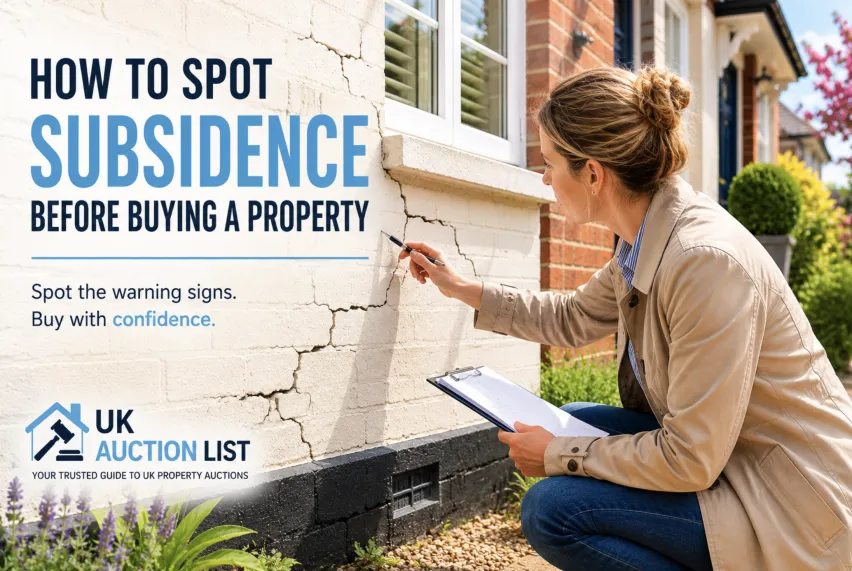
What Is Subsidence?
Subsidence occurs when the ground beneath a building sinks or shifts, causing the foundations to move. This movement can lead to cracking, distortion and structural damage throughout the property.
In the UK, subsidence is most commonly caused by:
- Clay soils shrinking during dry weather
- Tree roots extracting moisture from the ground
- Leaking drains washing away soil
- Poor ground conditions
- Historic mining activity
- Inadequate foundations
While subsidence can sound alarming, many affected properties can be repaired and continue to provide perfectly good homes for years to come.
Common Signs of Subsidence
Cracks in Walls
One of the most recognised signs of subsidence is cracking.
Look out for:
- Diagonal cracks running from doors and windows
- Cracks wider than 3mm
- Cracks that are wider at the top than the bottom
- Freshly filled or repainted cracks
Hairline cracks are common in many homes and are often caused by normal settlement or changes in temperature.
Doors and Windows That Stick
If doors or windows suddenly become difficult to open or close, it could indicate movement within the structure.
Look for:
- Doors catching on frames
- Windows that no longer shut properly
- Gaps appearing around frames
Movement can cause openings to become distorted over time.
Sloping Floors
Uneven floors can indicate structural movement.
Warning signs include:
- Floors that noticeably slope
- Furniture appearing uneven
- Bouncy or dipping floorboards
Older properties can naturally have some unevenness, but significant changes should be investigated further.
Rippling Wallpaper
Decorative finishes can sometimes reveal hidden movement.
Watch for:
- Wrinkled wallpaper without signs of damp
- Cracks reappearing after redecoration
- Separation between walls and skirting boards
These can all indicate ongoing structural movement.
Cracks Outside the Property
Don't forget to inspect the exterior.
Check for:
- Large cracks in brickwork
- Separation between extensions and the main house
- Leaning walls
- Distorted masonry around doors and windows
External evidence is often easier to spot than internal movement.
Trees and Subsidence
Large trees located close to a property can sometimes contribute to subsidence, particularly on clay soils.
Species commonly associated with higher water uptake include:
- Willow
- Poplar
- Oak
- Ash
- Sycamore
This doesn't mean every nearby tree is a problem, but it's worth considering as part of your assessment.
Damp or Subsidence?
Sometimes the signs can be confused.
Damp typically causes:
- Staining
- Mould growth
- Peeling paint
- Musty smells
Subsidence is more likely to result in:
- Cracking
- Distortion
- Structural movement
- Doors and windows sticking
In some cases, a property may suffer from both.
What Should You Do If You Suspect Subsidence?
Arrange a Survey
A qualified surveyor can assess whether cracks are likely to be cosmetic or structural.
Depending on the circumstances, they may recommend:
- A Home Survey
- A Building Survey
- A Structural Engineer's Report
Professional advice can save significant expense later.
Check Insurance History
If a property has previously suffered subsidence, ask whether:
- Insurance claims have been made
- Monitoring has taken place
- Repairs have been completed
- Completion certificates are available
Historic subsidence is not necessarily a deal-breaker if properly repaired.
Obtain Specialist Advice
Where significant movement is suspected, consult a structural engineer before proceeding.
They can determine:
- Whether movement is historic or ongoing
- Likely causes
- Repair options
- Estimated costs
Subsidence and Auction Properties
Auction properties can present excellent opportunities, but buyers should carry out thorough due diligence before bidding.
Many auction lots are:
- Vacant properties
- Older buildings
- Properties requiring renovation
- Buildings that have been neglected
Always:
- Read the legal pack carefully
- Review any surveys provided
- Arrange viewings where possible
- Seek professional advice before bidding
Remember, auction purchases are usually legally binding once the hammer falls.
Can You Still Buy a Property With Subsidence?
Yes.
Many properties affected by subsidence are successfully repaired and continue to perform perfectly well.
The key considerations are:
- Whether movement is ongoing
- The cost of repairs
- Future insurability
- Mortgage lender requirements
Some buyers actively seek properties with known structural issues because they can often be purchased below market value, creating an opportunity to add value following appropriate repairs.
Final Thoughts
Subsidence is one of those property terms that can make buyers nervous, but it's important not to jump to conclusions. Cracks and movement can occur for many reasons, and not every property showing signs of wear has a serious structural problem.
The best approach is to view carefully, ask questions, obtain professional advice and carry out thorough due diligence before committing to a purchase. Whether you're buying through an estate agent or at auction, understanding the warning signs can help you avoid costly surprises and buy with confidence.
Frequently Asked Questions
Is every crack in a wall a sign of subsidence?
No. Many cracks are caused by normal settlement, temperature changes or ageing materials. Large diagonal cracks and signs of structural movement are generally more concerning.
Can a mortgage be obtained on a property with subsidence?
Potentially, yes. Lenders will usually want evidence that any subsidence has been properly investigated and repaired.
Does subsidence reduce property value?
It can, particularly if movement is ongoing. However, properties with historic, repaired subsidence may have little or no long-term impact on value.
Who should inspect suspected subsidence?
A qualified surveyor or structural engineer should assess any suspected structural movement.
Should I avoid buying a property with subsidence?
Not necessarily. Many buyers successfully purchase properties with historic or repairable subsidence. The key is understanding the risks, repair costs and future implications before proceeding.
Thinking of buying a property at auction?
Browse thousands of auction properties across the UK on UK Auction List and carry out thorough due diligence before bidding. Reviewing legal packs, arranging viewings and identifying potential structural issues can help you buy with greater confidence.
if you're thinking about buying a property at auction, do check the legal pack carefully and always arrange a viewing of the property so that you can check for signs of subsidence, before deciding whether to bid. While the auctioneers should disclose details of structural damage or subsidence, you should always rely on your own investigation and due diligence before progressing.