Cracks in walls, ceilings or external brickwork can be worrying when viewing a property, particularly if you're considering buying at auction. While some cracking is simply the result of natural movement, ageing materials or minor settlement, other cracks may indicate more significant structural problems that need investigating.
For auction buyers, understanding the difference is important. A property showing signs of cracking isn't necessarily one to avoid, but it's essential to understand what may have caused it, whether the problem is ongoing and what repairs might be required before committing to a purchase.
What Causes Cracks in a Property?
Buildings naturally move and change over time. Materials expand and contract with temperature changes, plaster dries and shrinks, and foundations can settle as the ground beneath them adjusts to the weight of a building.
Common causes of cracks include:
- Natural settlement: Minor movement as a building settles, particularly in newer properties or following alterations.
- Thermal movement: Building materials expand in warm conditions and contract when temperatures fall.
- Drying shrinkage: Plaster, mortar and other materials can shrink as they dry, sometimes creating fine cracks.
- Structural movement: Movement affecting walls, foundations, roof structures or other load-bearing elements.
- Subsidence: Downward movement of the ground supporting a building, potentially causing damage to the structure.
- Poor workmanship or alterations: Inadequate support following the removal of walls, poorly constructed extensions or defective building work can lead to cracking.
- Water damage: Leaking pipes, drains or gutters can affect masonry, foundations or surrounding ground conditions.
Identifying the cause is far more important than simply looking at the size of the crack.
Hairline Cracks vs Structural Cracks – What's the Difference?
Hairline cracks are relatively common, particularly in older properties. Fine cracks in plaster, around ceilings or where different materials meet may be caused by natural drying, temperature changes or minor movement.
These are often cosmetic and can usually be repaired during normal decorating.
Structural cracks, however, may extend through masonry rather than simply affecting the surface plaster. They can be wider, more pronounced, irregular or diagonal, and may be accompanied by other signs of movement, such as distorted doorframes or uneven floors.
However, there is no single crack width that can reliably determine whether a property has a structural problem. Even relatively small cracks may warrant investigation if they are new, widening or accompanied by other signs of movement.
Which Types of Cracks Should Raise Concerns?
When viewing a property, pay attention to the pattern, direction and location of any cracks.
Diagonal cracks
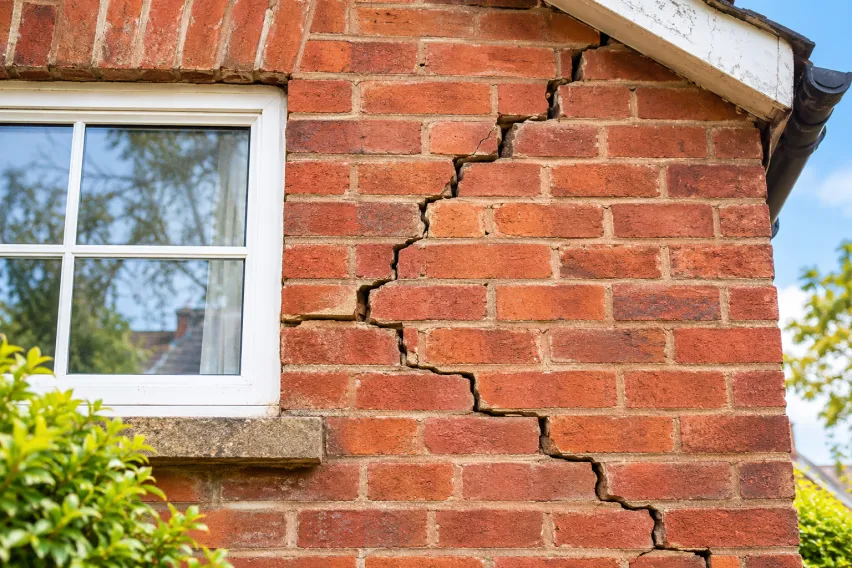
Diagonal cracks, particularly those appearing around windows and doors, can sometimes indicate structural movement. They may be wider at one end and extend through brickwork or masonry rather than following mortar joints.
Stepped cracks in brickwork
Cracks following the mortar joints in a stepped pattern may indicate movement within the masonry or the building's foundations. These are worth investigating, particularly if they are widening or accompanied by other visible defects.
Horizontal cracks
Horizontal cracks in walls can sometimes indicate pressure, movement or failure within the structure. Their significance will depend on the wall construction, location and any associated bulging or displacement.
Cracks around windows and doors
Cracking around openings can result from movement, inadequate lintels, changes to the structure or normal settlement. Look for signs that frames are distorted or that openings are no longer square.
Cracks where extensions meet the original building
Extensions and older buildings may move at different rates, sometimes resulting in cracking where the two structures meet. This isn't necessarily serious, but the cause and extent of movement should be established.
Signs of Subsidence or Structural Movement
Cracks are often the most obvious indication of potential structural movement, but they aren't the only signs to look for.
Other warning signs may include:
- Doors or windows that suddenly begin sticking or no longer close properly.
- Gaps appearing between skirting boards and floors.
- Floors that appear to slope or dip.
- Cracks that continue to widen or reappear after being repaired.
- Walls that appear to lean, bow or bulge.
- Gaps developing between an extension and the main building.
- Wallpaper tearing or becoming distorted around cracks.
The presence of one of these signs doesn't automatically mean subsidence. However, several symptoms occurring together, particularly alongside new or expanding cracks, should be investigated.
Can Structural Cracks Be Repaired?
Yes, many cracks can be repaired, but the correct approach depends on the underlying cause.
If cracking is cosmetic and the movement has stopped, repairs may involve filling, plastering, repointing or redecorating.
If cracking has been caused by structural movement, simply filling the crack may only provide a temporary solution. The underlying issue may need to be addressed first, which could involve repairing defective drainage, correcting inadequate support, dealing with water ingress or undertaking more specialist structural repairs.
Where subsidence is suspected, underpinning may sometimes be necessary, although it isn't required in every case. The appropriate repair should be determined by a suitably qualified professional following investigation.
What Should Auction Buyers Look Out For?
Auction properties can offer excellent opportunities, particularly for buyers willing to take on refurbishment projects. However, structural problems can introduce additional costs, delays and complications.
When viewing a property with cracks:
- Take photographs of any visible cracking and note its location.
- Look at both the inside and outside of the property where possible.
- Check whether cracks appear to extend through the masonry or are confined to plaster.
- Look for associated problems such as sticking doors, uneven floors or distorted windows.
- Ask the auctioneer whether the seller is aware of any structural movement, previous repairs or insurance claims.
- Check the legal pack for references to subsidence, structural surveys, insurance claims, repairs or guarantees.
- Consider whether further investigation is possible before the auction.
Remember that auction properties are often sold in need of repair, and the condition of the building may be reflected in the guide price. However, a low guide price shouldn't be taken as evidence that structural problems are minor or that repair costs will be affordable.
When Should You Seek a Structural Engineer's Advice?
If cracks appear significant, are continuing to widen, or are accompanied by other signs of movement, professional advice should be sought before proceeding with a purchase.
A surveyor may recommend further investigation by a structural engineer, who can assess the building, investigate the likely cause of movement and advise on any necessary repairs.
Depending on the circumstances, further investigations may include monitoring cracks over a period of time, checking drainage, examining foundations or assessing ground conditions.
For auction buyers, obtaining this advice before bidding is particularly important, as once the hammer falls, you're generally committed to the purchase.
Buying a Property with Cracks at Auction – Is It Worth the Risk?
A property showing cracks isn't necessarily a bad investment. Some issues may be relatively straightforward to resolve, while others could require substantial structural work.
The key is understanding the problem before you buy.
If the cause of the cracking is known, the movement has stabilised and repairs can be properly assessed and costed, the property may still represent an attractive opportunity.
However, if the cracks are unexplained, appear to be worsening or there are signs of potentially serious structural movement, it's important to seek professional advice and establish the likely costs before bidding.
Auction properties can offer fantastic opportunities, but doing your homework beforehand is essential. A thorough inspection, careful review of the legal pack and appropriate professional advice can help you make a more informed decision and avoid unexpected surprises after purchase.
Looking for your next renovation project? Explore the latest property auctions across the UK with UK Auction List and research each property before deciding whether to bid.
You might also be interested in these articles: