Damp is one of the most common issues found in UK homes, particularly in older properties. While some cases are relatively minor and inexpensive to remedy, others can indicate more serious structural or maintenance problems that may require significant investment.
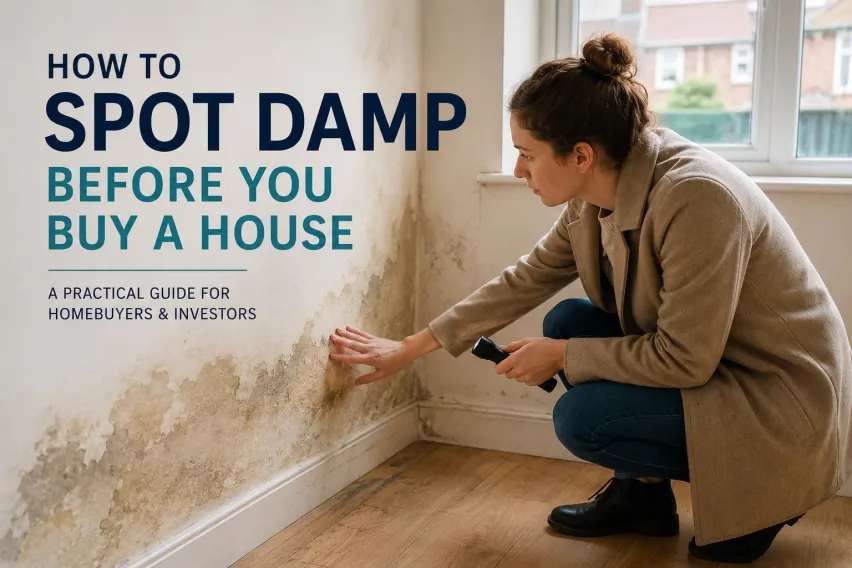
The good news is that damp isn't always a reason to walk away from a property. Many homes with damp can be successfully repaired and restored. However, it's important to recognise the warning signs before you commit to a purchase, so you can make an informed decision and budget accordingly.
Whether you're buying through an estate agent or at auction, knowing what to look for could save you thousands of pounds and prevent unpleasant surprises after moving in.
What Causes Damp?
Damp occurs when excess moisture enters or becomes trapped within a property. There are three main types:
Rising Damp
Rising damp occurs when moisture from the ground travels up through walls by capillary action. It is most commonly found in older properties where the damp-proof course has failed, been bridged, or was never installed.
Penetrating Damp
Penetrating damp is caused by water entering the property from outside. Common causes include damaged roofing, leaking gutters, cracked render, defective pointing, or faulty window seals.
Condensation
Condensation is the most common form of damp and occurs when warm, moist air comes into contact with colder surfaces. Poor ventilation, inadequate heating and modern airtight homes can all contribute to condensation problems.
Signs of Damp to Look Out For
While viewing a property, keep an eye out for the following warning signs:
Musty Smells
A persistent damp or mouldy smell is often one of the first indicators that moisture problems exist, even when visible signs have been covered up.
Peeling Wallpaper or Paint
Wallpaper lifting away from walls, bubbling paintwork or flaking plaster can indicate moisture trapped beneath the surface.
Discoloured Walls and Ceilings
Look for brown, yellow or dark patches on walls and ceilings. Water staining often suggests leaks or long-term moisture issues.
Mould Growth
Black mould around windows, behind furniture, in corners of rooms or on ceilings may indicate condensation or poor ventilation.
Tide Marks
Horizontal staining or "tide marks" on internal walls, usually up to one metre from floor level, can be a sign of rising damp.
Salt Deposits
White, powdery deposits on walls may occur when moisture evaporates and leaves mineral salts behind.
Damaged Skirting Boards
Rotting, crumbling or distorted skirting boards can indicate prolonged exposure to moisture.
Cold or Damp Walls
If possible, touch internal walls during a viewing. Excessively cold or damp-feeling surfaces may suggest moisture problems.
Areas of the Property to Check Carefully
Some parts of a property are more prone to damp than others.
Bathrooms and Kitchens
Look for mould, poor ventilation and signs of leaking pipework.
Loft Spaces
Check for water staining, damp insulation, roof leaks and signs of poor ventilation.
Basements and Cellars
Underground spaces are particularly susceptible to moisture penetration and require careful inspection.
Around Windows and Doors
Inspect seals, frames and surrounding plasterwork for signs of water ingress.
External Walls
Check for cracks, damaged pointing, overflowing gutters and blocked drains.
What Should You Do If You Spot Damp?
Finding signs of damp doesn't necessarily mean you should abandon the purchase.
Instead:
Ask Questions
Ask the seller whether damp treatment has been carried out previously and whether guarantees are available.
Commission a Survey
A professional survey can help identify the cause, extent and likely cost of repairs.
Obtain Specialist Reports
For significant damp concerns, consider instructing a damp and timber specialist to carry out a detailed inspection.
Budget for Repairs
Minor condensation issues may cost very little to resolve, whereas extensive structural damp could require more substantial investment.
Renegotiate if Necessary
If surveys uncover significant defects, you may be able to renegotiate the purchase price to reflect the cost of remedial works.
Damp in Auction Properties
Properties sold at auction often require renovation and improvement, making damp a common issue.
Before bidding:
- Read the legal pack carefully.
- Arrange a viewing wherever possible.
- Commission surveys before the auction date.
- Budget realistically for repairs.
- Factor refurbishment costs into your maximum bid.
Remember that once the auction hammer falls, you are legally committed to completing the purchase.
How Much Does Damp Treatment Cost?
Costs vary considerably depending on the cause and severity of the problem.
Typical examples include:
Repair Type. Approximate Cost
Improving ventilation. £100–£1,000+
Repointing brickwork. £500–£5,000+
Gutter repairs. £100–£1,500+
Damp-proof course treatment £2,000–£8,000+
Plaster replacement. £500–£5,000+
Always obtain professional quotations before proceeding with any work through personal recommendations or e.g. CheckATrade
Final Thoughts
Damp is one of the most common issues encountered when buying property, but it doesn't automatically make a home a bad investment. The key is understanding what you're dealing with before you commit.
By learning to spot the warning signs, carrying out proper due diligence and obtaining professional advice where necessary, you can avoid costly surprises and make a more informed purchasing decision. In many cases, identifying damp early can even provide an opportunity to negotiate a better price and unlock value in a property that others may overlook.
Frequently Asked Questions
Is damp a deal-breaker when buying a house?
Not necessarily. Many damp issues can be resolved, but it's important to understand the cause, extent and cost before proceeding.
Can a mortgage lender refuse a property because of damp?
In severe cases, lenders may request further investigations or repairs before approving a mortgage.
Does a survey check for damp?
Yes. Most surveyors will identify visible signs of damp and recommend further investigations if necessary.
Are older properties more likely to have damp?
Older homes can be more susceptible due to ageing materials, solid walls and historic damp-proofing methods, but modern homes can also experience damp problems.
Always seek professional advice from a qualified surveyor or damp specialist before making decisions based on suspected damp issues.